

Saint of the Week: John of the Cross
12/17/2025
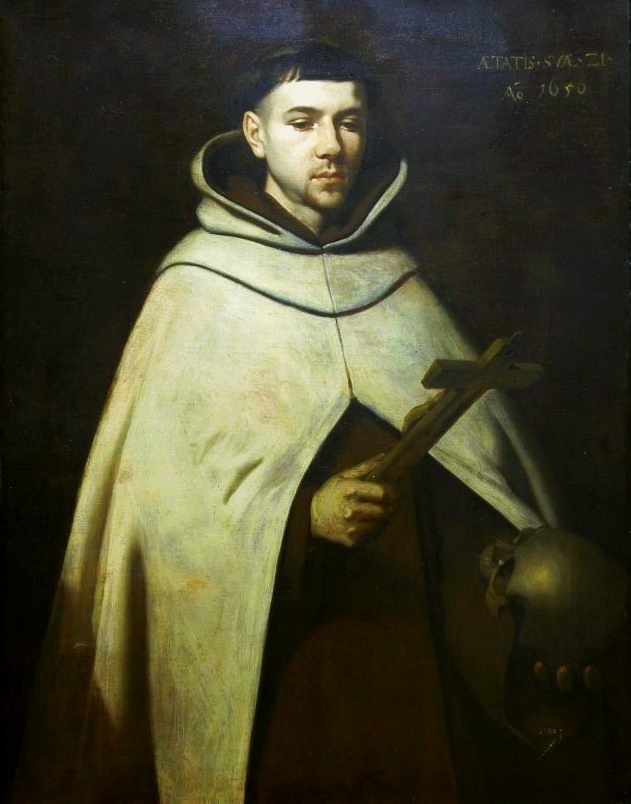
John of the Cross
Mystic and Monastic Reformer
1591
From Lesser Feasts and Fasts:
The Carmelite theologian John of the Cross has been called “the poet’s poet,” “spirit of flame,” and “celestial and divine.”
John was born in 1542 at Fontiveros, near Avila, Spain. After his third birthday, his father died, leaving his mother and her children reduced to poverty. John received elementary education in an orphanage in Medina del Campo. By the age of seventeen, he had learned carpentry, tailoring, sculpturing, and painting through apprenticeships to local craftsmen.
After university studies with the Jesuits, John entered the Carmelite Order in Medina del Campo and completed his theological studies in Salamanca. In 1567, he was ordained to the priesthood and recruited by Teresa of Avila for the reformation of the Carmelite Order.
John became disillusioned with what he considered the laxity of the Carmelites and, in 1568, he opened a monastery of “Discalced” (strict observance) Carmelites, an act that met with sharp resistance from the General Chapter of the Calced Carmelites. John was seized, taken to Toledo, and imprisoned in the monastery. During nine months of great hardship, he comforted himself by writing poetry. It was while he was imprisoned that he composed the greater part of his luminous masterpiece, The Spiritual Canticle, as well as a number of shorter poems. His other major works include The Ascent of Mount Carmel, The Living Flame of Love, and The Dark Night. It is this latter work, Noche obscura del alma, that gave the English language the phrase “dark night of the soul.”
After a severe illness, John died on December 14, 1591, in Ubeda, in southern Spain.
Among this poet's many writings is "Counsels to a Religious," advice to a friar about the true nature of life at a monastery. Concerning "mortification," that is, the kind of humbling of the ego and control of one's own desires that the spiritual life demands, John had this to say:
To practice the second counsel, which concerns mortification, and profit by it, you should engrave this truth on your heart. And it is that you have not come to the monastery for any other reason than to be worked and tried in virtue; you are like the stone that must be chiseled and fashioned before being set in the building. Thus you should understand that those who are in the monastery are craftsmen placed there by God to mortify you by working and chiseling at you. Some will chisel with words, telling you what you would rather not hear; others by deed, doing against you what you would rather not endure; others by their temperament, being in their person and in their actions a bother and annoyance to you; and others by their thoughts, neither esteeming nor feeling love for you. You ought to suffer these mortifications and annoyances with inner patience, being silent for love of God and understanding that you did not enter the religious life for any other reason than for others to work you in this way, and so you become worthy of heaven. If this was not your reason for entering the religious state, you should not have done so, but should have remained in the world to seek your comfort, honor, reputation, and ease.
What John of the Cross says about entering the monastery is perhaps true of entering any religious community. We come to sacred space, to beloved community, to be transformed. If we come here for "solace only, and not for strength; for pardon only, and not for renewal," as one of the Episcopal Eucharistic prayers says, perhaps we should reconsider. Churches should be safe spaces certainly, but they must remain dangerous places, too, where we can encounter "more than we can ask for or imagine" (Ephesians 3:20), the God in whom we find and become our truest selves.
Judge eternal, throned in splendor, who gave John of the Cross strength of purpose and faith that sustained him even through the dark night of the soul: Shed your light on all who love you, in unity with Jesus Christ our Savior; who with you and the Holy Spirit lives and reigns, one God, for ever and ever. Amen.


